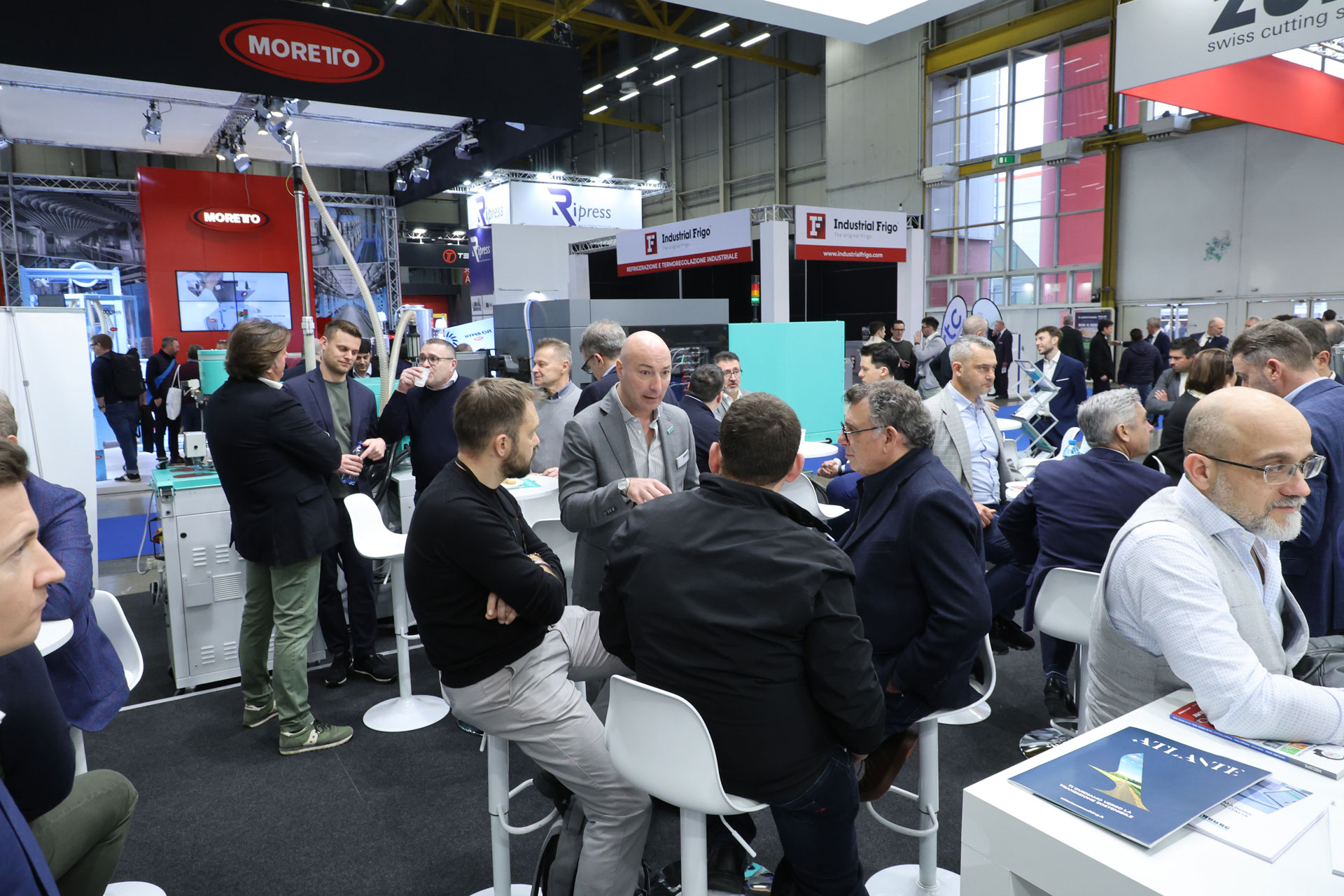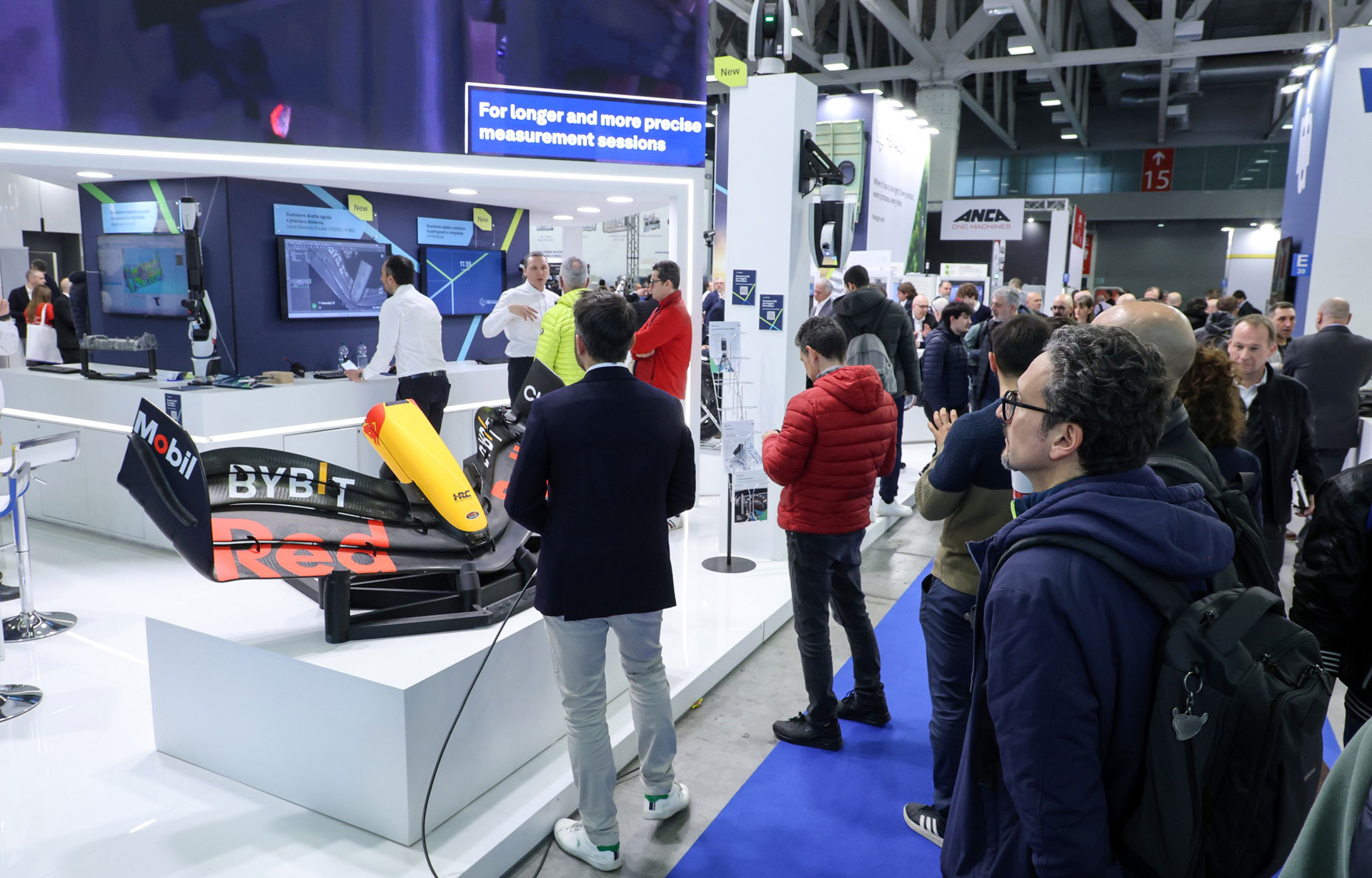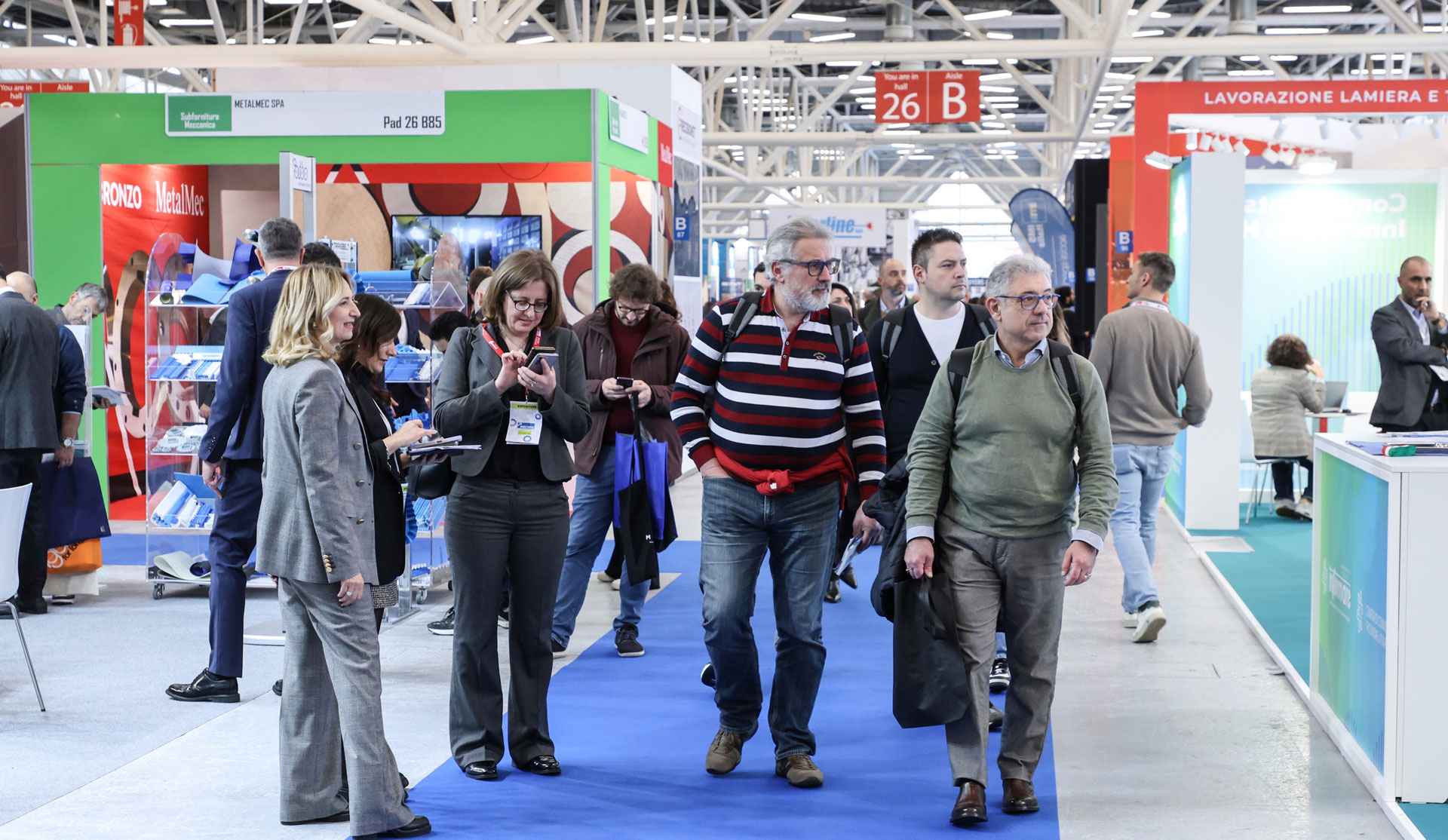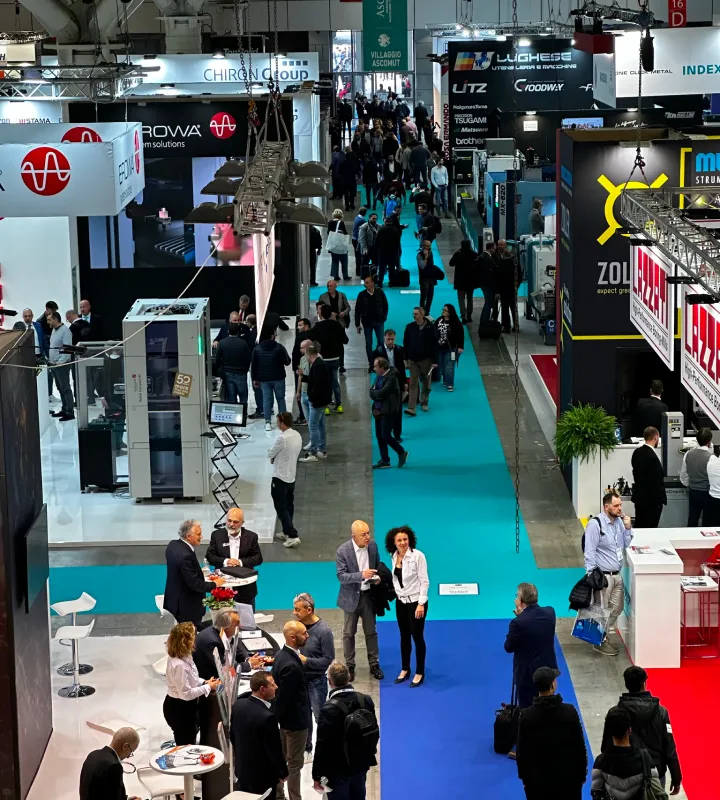
With the presentation of the Observatory data during the opening conference, the 24th edition of MECSPE officially kicked off: at BolognaFiere, over 2,000 exhibiting companies, 13 thematic halls, and a wide-ranging program of initiatives dedicated to the manufacturing sector.
MECSPE 2026 returns tomorrow. From March 4 to 6, BolognaFiere will host the 24th edition of the The manufacturing industry, with more than 486,000 active companies at the end of 2025, confirms its role as one of the pillars of the national economy and enters 2026 with an overall stable outlook, despite a context marked by new competitive pressures. In this scenario, the sector demonstrates resilience thanks to an entrepreneurial spirit capable of adapting and staying the course.
Nearly seven out of ten companies report that their performance is aligned with their annual targets, while overall satisfaction remains good, with around 30% expressing high or very high satisfaction—demonstrating resilience and the ability to consistently meet expectations over time. Despite uncertainties related to the impact of tariffs—which concern about half of businesses—and the assessment of the new measures introduced by the 2026 Budget Law, deemed insufficient by 55%, companies continue to focus on steering industrial decisions according to market priorities and transforming expertise and technological innovation into competitiveness. In this context, incentives represent a possible support tool, but not the only lever for growth.
These findings emerge from the MECSPE Observatory conducted by Nomisma for the third four-month period of 2025 and presented at the opening event of the 24th edition of MECSPE, the leading trade fair for manufacturing and industrial innovation, organized by Senaf and held from March 4 to 6 at BolognaFiere.
Looking ahead to 2026–2027, 56% of entrepreneurs express moderate confidence in the evolution of their sector’s market, while 26% report high or very high confidence, confirming the solidity of companies and their ability to continue building growth paths even in a changing scenario. This outlook is also reflected in operational assessments: 35% of companies consider their order book adequate or above their production capacity and business targets, while 30% regard it as stable.
The sector continues to focus on competitiveness and resilience, investing first in efficiency, automation and digitalization, and leveraging entrepreneurial capability to translate these choices into tangible advantages, followed by structural transformations such as customization, energy transition and environmental sustainability.
Alongside these elements, during the third four-month period of 2025 companies reported several critical issues impacting operations: uncertainty linked to the international context, raw material price trends, and difficulties in recruiting human resources—highlighting the importance of skills required to sustain growth.
This scenario is compounded by investment support measures introduced with the 2026 Budget Law, following the conclusion of the Transition 5.0 Plan, which had already received mixed evaluations from entrepreneurs. According to the previous Observatory survey, nearly half considered incentives insufficient—while acknowledging their importance for innovation—or entirely inadequate to support the sector.
The new 2026 measures, such as enhanced depreciation (hyper-depreciation) and renewed funding for Industry 4.0 incentives, are also viewed cautiously: more than half of companies consider them little or not at all sufficient to support their growth strategies. Consistent with this perspective, over half of entrepreneurs have not yet decided whether to use the available instruments, and only 1 in 5 plans to apply. Key obstacles include failure to meet eligibility requirements and procedural complexity, followed by the perception that measures are not fully aligned with company needs. In some cases, businesses choose to invest without public instruments, confirming an entrepreneurial approach that prioritizes investment when necessary, even without extraordinary measures.
On the international front, tariffs continue to have a tangible impact: more than half of companies report having already experienced or currently experiencing effects, with 2 out of 10 indicating significant negative impacts and 3 out of 10 reporting more limited consequences. About half of respondents declare themselves very or fairly concerned about future trade developments. This aligns with recent analysis by the Confindustria Study Center, which reported a 1.9% decline in Italian exports in the fourth quarter of 2025. However, the MECSPE Observatory highlights stable export prospects for 2026–2027: over half of companies expect stability, while around 28% anticipate growth.
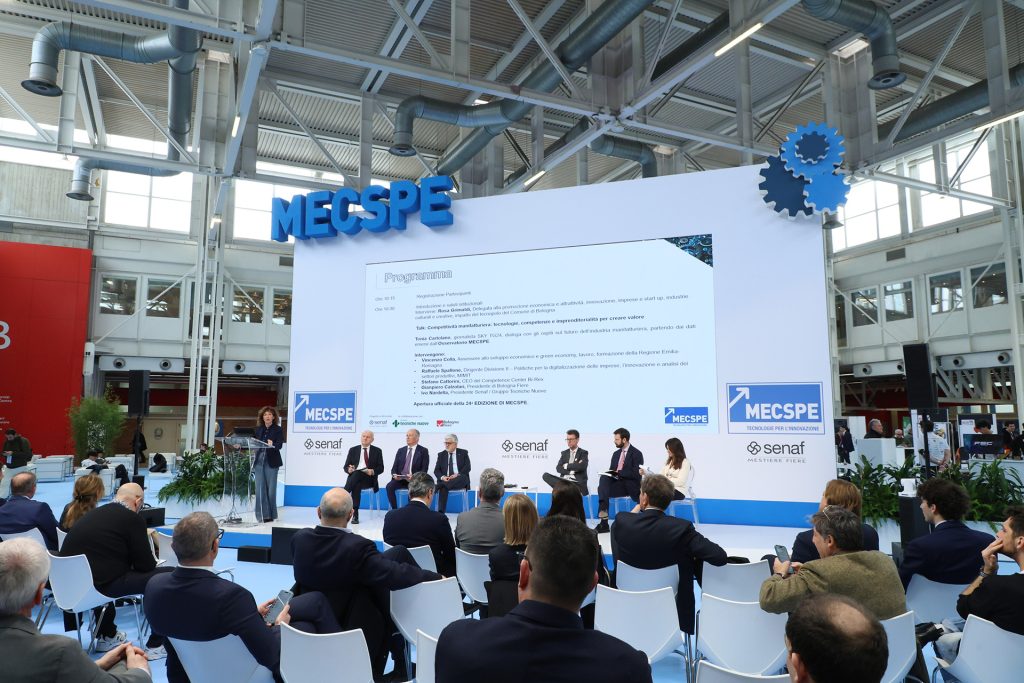
In this context, the opening of the 24th edition of MECSPE featured an inaugural conference dedicated to manufacturing competitiveness, bringing together institutions and businesses to discuss technology, skills and entrepreneurship as levers for creating value in new global scenarios—beyond incentives alone—and emphasizing companies’ ability to transform innovation into concrete results.
Following the institutional greetings by Rosa Grimaldi, Delegate for Economic Promotion and Attractiveness, Innovation, Enterprises and Start-ups, Cultural and Creative Industries, and Technopole Impact of the Municipality of Bologna, the speakers included Vincenzo Colla, Regional Minister for Economic Development and Green Economy, Labor and Training of Emilia-Romagna; Raffaele Spallone, Head of Division II – Policies for Business Digitalization, Innovation and Sector Analysis at the Ministry of Enterprises and Made in Italy (MIMIT); Stefano Cattorini, CEO of BI-REX Competence Center; Gianpiero Calzolari, President of BolognaFiere; and Ivo Nardella, President of Senaf / Tecniche Nuove Group.
“In a context marked by fragile international balances, where competitive pressures can severely challenge our production system and where the twin transition requires radical change in our factories, industrial policy faces a complex challenge,” stated Raffaele Spallone. “To address this challenge, MIMIT is undertaking a profound transformation of its policies. The White Paper ‘Made in Italy 2030 – For a New Industrial Strategy,’ presented at the beginning of 2026, outlines the strategic roadmap to strengthen the competitiveness of Italy’s production system by the end of the decade. It is a concrete action plan based on rediscovering manufacturing as a central pillar of the Italian economy, built on three major transformations—the ‘triple challenge’—and on restoring an active role for the State to ensure energy autonomy, technological sovereignty and economic security.”
“What is happening globally fuels fear and uncertainty while shaking international economic, political and value-based relationships,” said Vincenzo Colla. “In this scenario, where investments risk suffering, we must immediately strengthen the resilience of our economic and social ecosystem. With the National Recovery and Resilience Plan nearing completion, it is essential to look to Europe and forge alliances to access future funding. As a Region, we will continue supporting business investments and supply chains in technological innovation and sustainability as competitive levers for high-quality manufacturing.”
“The data confirm that Italian manufacturing is entering a mature phase: companies invest when the market requires it, carefully select priorities, and focus on technology and skills to create value,” declared Rosa Grimaldi. “Bologna is not only the host city of MECSPE but an integrated ecosystem where advanced manufacturing, the Technopole, supercomputing, universities and higher technical institutes work together. Our commitment is to strengthen the connection between research, businesses and talent.”
“The picture emerging from the National MECSPE Observatory confirms the resilience and stability of Italy’s production system, even amid increasing geopolitical and trade instability,” stated Stefano Cattorini. “Despite legitimate concerns over tariffs, exports remain a pillar of national competitiveness, confirming the strength of Italian supply chains in foreign markets.”
“MECSPE confirms BolognaFiere as a strategic platform serving Italian manufacturing,” said Gianpiero Calzolari. “In a complex international context, companies demonstrate that entrepreneurial capability—investing in technology, skills and supply chains beyond incentives alone—remains the decisive lever.”“Italian manufacturing is undergoing a profound transformation, where technological innovation and international dynamics are reshaping the rules of competitiveness,” commented Ivo Nardella. “Investment support tools remain important, but they cannot be the sole lever. Industry must be capable of ‘walking without crutches,’ investing because technology generates real value and improves processes. MECSPE places this objective at its core, offering companies a venue to discover concrete solutions, engage with supply chains, and translate innovation into business-driven industrial decisions.”
For more information: www.mecspe.com/en
MECSPE Exhibition Halls
Machines and Tools - Machine tools, Equipment, Tools and Design Software; Sheet Metal Working Machines - Bending, Stamping, Cutting, Assembly, Welding, Materials and Software; Digital Factory - Industrial Informatics, IoT, Industrial Sensing, Cloud-manufacturing, Automatic Identification Technologies, Applications, Devices, Instrumentation and Intelligent Components for Process Interpretation and Interconnection; Logistics - Packaging, Packaging, Handling, Material handling, Lean manufacturing, Warehouse management software, Supply chain management, Security Systems, PPE, Third party; Mechanical Subcontracting - Precision Machining, Metal Carpentry, Mechanical Constructions, Fasteners, Foundries, Minuteries, Wire Processing, Third Party Industrial Processing, Micromachining; Elettronica Italia - Cem (contract electronics manufacturer), Wiring harnesses, Ems (electronics manufacturing service), Pcb (printed circuit board manufacturers), Engineering and design studios; Eurostampi, plastics , rubber and composites - Plastics, rubber and composites processing, Machinery and equipment, Auxiliary equipment, Innovative materials, Molding, Extrusion, Packaging, Blowing, Molds, Models, Normalized mold components, Design, Simulation and design software, Micromachining; Additive Manufacturing - 3D Printing, Rapid Prototyping, Rapid Manufacturing, Systems and services for reverse engineering, Additive Technology, Materials, Services, Hardware: 3D printers and scanners, accessories, Simulation and design software; Treatments and Finishes - Surface treatment equipment, Furnaces, Electroplating, Chemical and electronic processes, Washing, Metallization, Enameling, Galvanizing, Products and accessories for treatments, Heat Treatments, Painting; Nonferrous Materials and Alloys - Nonferrous materials processing (Aluminum, Titanium, Magnesium, Light alloys), Die castings, Foundries, Contract industrial processing, Technologies, Design, Engineering; Automation and Robotics-Automation and Robotics, Assembly, Assembly and Handling; Control and Quality-Certification and Quality Control, Metrology, Measuring Instruments, Laboratory Testing, Calibration, Analytical Equipment, Vision; Power Drive-Mechanical Power Transmission Parts, Hydraulics, Pneumatics, Mechatronics, Motion Control, Maintenance, Compressed Air.
Press Office
MY PR – www.mypr.it
Arianna Bonfioli – 335 6111390 – arianna.bonfioli@mypr.it
Barbara Gori – 340 1409543 – barbara.gori@mypr.it
Mariagiovanna Monzo – 340 251 3708 – mariagiovanna.monzo@mypr.it